
Settle the Argument First: What This Actually Costs You
One of you thinks the squeak is just annoying. The other thinks it's fine because "the door still goes up and down." Here's the number that should end the debate: a worn roller or two costs maybe $10-$30 a piece to swap out in a batch. A cable that snaps while the door is open can drop a 150-plus pound door on whatever's underneath it — a car, a bike, a foot — and often takes the opener's motor or gears down with it. That turns a small maintenance job into a same-day emergency call and a much bigger invoice. Ignoring it for another season doesn't make the problem go away; it just moves the failure from "we noticed it" to "it happened at the worst possible moment," usually during a storm when you need the door to seal tight against wind and rain.
What's Actually Wearing Out
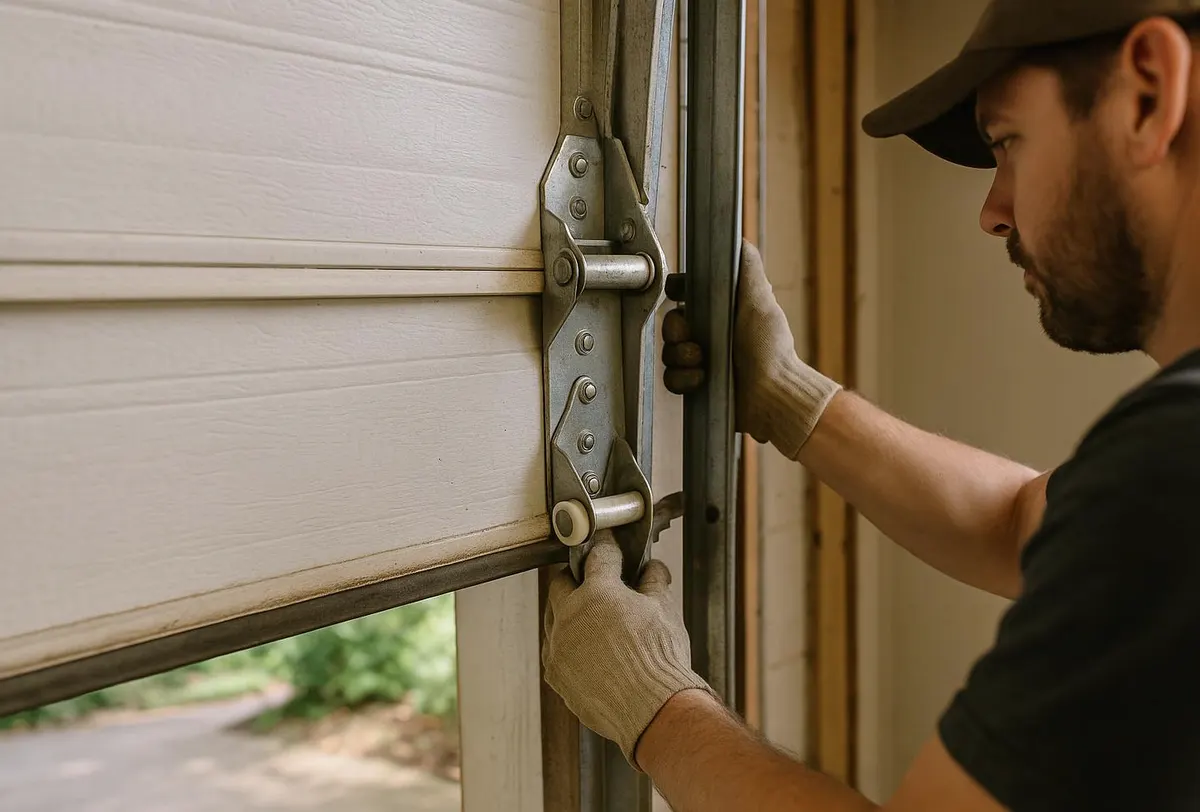
Garage doors have two sets of parts that take a beating but rarely get looked at: the rollers that guide the door along its tracks, and the cables that work with the springs to lift and lower the door safely. Neither one is designed to last forever, and Central Florida's climate speeds up their decline. Heat and humidity swell wood-composite doors and panels, afternoon downpours get moisture into roller bearings and cable strands, and the salt-tinged air drifting inland from the coast accelerates rust on anything metal that isn't sealed or lubricated. Add in the wind-load stress hurricane season puts on the whole door system, and parts that might last years in a drier climate wear out faster here.
Signs Your Rollers Are Shot
- A grinding or rhythmic squeak every time the door moves — not a one-time sound, but one that repeats with each rotation.
- The door seems to shudder or hop slightly as it travels, especially near the top or bottom of the track.
- You can see flat spots, cracks, or a plastic roller that's chipped where it meets the track.
- The door sits crooked or seems to bind in one spot more than others.
Signs Your Cables Are Failing
- Visible fraying — thin wire strands sticking out like a broken shoelace — anywhere along the cable, especially near the bottom bracket or the drum at the top.
- Rust spots or discoloration on the cable itself, which weakens the metal even if it looks intact.
- The door looks slightly uneven when it's down, like one side is sitting lower than the other.
- A popping or snapping sound during operation, which can mean a cable has already started to give way.
Why "We'll Get to It" Is the Expensive Choice
Worn rollers and fraying cables don't fail in isolation — they put extra strain on the springs, the opener's drive system, and the tracks. A roller that's grinding against metal can chew a groove into the track, which then needs replacing instead of just a roller swap. A cable under extra stress because its partner cable on the other side is fraying puts uneven pull on the door, which can warp panels or pull a track loose from the wall. None of this shows up overnight. It builds for weeks or months, which is exactly why these are the parts that cause the loud, sudden failures — the door that won't budge, the door that crashes down, the opener that burns out trying to force a door that's binding on bad rollers.
The trade-off is simple: a scheduled roller and cable check costs a fraction of an emergency repair, and it doesn't involve a non-functioning garage door on the one day you actually need to get the car out before a storm rolls in.
What You Can Check Yourself Right Now
- Look, don't touch. With the door closed and the opener disconnected, visually inspect the cables from bottom to top for fraying, rust, or kinks. Do the same for the rollers — look for cracks, flat spots, or rollers that have come loose from their stems.
- Listen during a normal open/close cycle. A smooth, quiet operation is good. Grinding, popping, or a door that jerks instead of gliding means something's wearing unevenly.
- Check for rust after a stretch of heavy rain. Humidity and afternoon storms are hard on exposed metal hardware — rust on rollers or cable ends is a sign moisture is getting in and should be addressed before hurricane season puts more strain on the system.
Cables are under high tension and should never be adjusted or replaced by hand — that part is not a DIY job, full stop. Rollers on some door styles can be swapped by a confident homeowner, but if you're not sure which kind you have, it's worth getting a second opinion before you start taking anything apart.
When to Call Lake Mary Door & Opener
If you're seeing fraying, rust, or a door that's starting to sit crooked, it's time to call before the season turns the small problem into a big one. Our Cable & Roller Replacement service replaces worn components as a set so the door moves evenly on both sides, and it's a good opportunity to roll in a full Garage Door Maintenance & Tune-Up — checking spring tension, track alignment, and opener performance all at once rather than one emergency visit at a time.
If you're in Lake Mary, FL or nearby in Sanford, Longwood, Heathrow, Winter Springs, Altamonte Springs, Casselberry, or Oviedo, give us a call. We offer same-day availability and honest pricing, so you can get this handled before storm season puts it to the test.